
This EURJPY trade example shows a bullish signal that moved into +90 pips running profit.
The setup followed the main bullish trend. Price had broken recent higher highs and continued moving upward.
Before the buy entry, EURJPY corrected lower after reacting from supply. That pullback created the opportunity.
The main lesson from this signal result is simple: wait for the trend, let price collect liquidity, then enter only after the setup gives a structured opportunity.
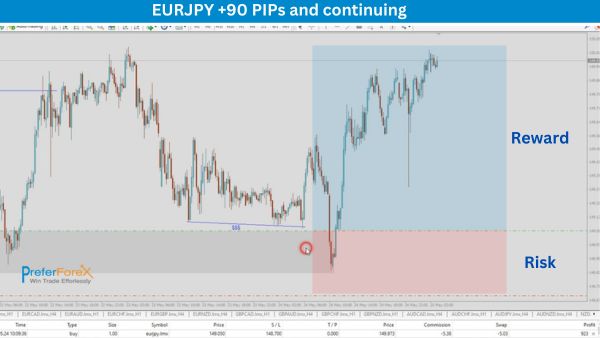
EURJPY Signal Snapshot
| Pair | EURJPY |
| Trade direction | Buy |
| Trade status in recording | Running in profit |
| Profit shown | +90 pips |
| Entry style | Pending order |
| Main method | Market order flow and liquidity-based trade planning |
EURJPY Main Trend View
The main trend of EURJPY was bullish.
Price had broken recent higher highs. This showed that buyers were still controlling the broader structure.
However, price reached a strong supply area near the top of the chart. Sellers reacted from that area and pushed the market lower.
That move was not treated as a full bearish reversal. It was viewed as a correction inside the broader bullish trend.
Why the Correction Was Important
A correction can create a better entry area.
In this trade, the market moved lower after reacting from supply. This gave price room to collect sell-side liquidity.
After that liquidity was taken, the bullish setup became more interesting.
This is why traders should avoid chasing the top of a bullish move. Waiting for a pullback can create a better risk-to-reward opportunity.
A bullish trend gives direction. A liquidity sweep and confirmation help create the entry plan.
Sell-Side Liquidity and Buy Entry
The buy trade was planned after EURJPY took sell-side liquidity.
Sell-side liquidity often sits below recent lows. Price can move into that area before buyers return.
In this case, the signal was planned with a pending order. That gave subscribers enough time to prepare for the trade.
By the time the trade was recorded, it was already running around +90 pips profit.
Video Trade Walkthrough
The short video below shows the EURJPY trade example and signal view.
Market Order Flow View
This analysis was based on the market order flow method.
Order flow helps traders understand how price moves between liquidity areas, supply zones, and demand zones.
In this EURJPY trade, the important parts were the bullish structure, the correction, the liquidity sweep, and the buy setup after that move.
For better understanding of order execution and pending orders, traders can read our guide on forex orders.
Key Concepts Behind the Setup
The setup followed a structured order-flow model.
It was not based on a random buy call. The trade idea came from structure and liquidity.
- Order flow principle: Price moved between liquidity and reaction areas.
- Clear market structure: EURJPY was breaking higher highs.
- Correction phase: Price pulled back after reacting from supply.
- Liquidity sweep: Sell-side liquidity was taken before the buy setup.
- Pending order: The trade gave subscribers time to prepare.
Risk and Trade Management
Even when a trade is in profit, management still matters.
A trader should know the stop loss, target, and invalidation point before entering.
If price moves in profit, the trade can still pull back. That is why planned management is important.
For deeper planning around exits, traders can review our guide on stop loss, take profit, and trailing stop.
A profitable trade still needs discipline. The goal is to follow the plan, not react emotionally to every candle.
Signal Planning View
This EURJPY trade shows why signal planning should include more than direction.
A useful signal should include entry logic, stop loss, target, and trade-management updates.
Traders who want planned trade ideas with entry, stop loss, take profit, and trade-management updates can learn more about our forex signals service.
What Traders Can Learn From This Example
The main lesson is to avoid chasing price after a strong bullish move.
EURJPY was bullish, but the better opportunity came after the correction and liquidity sweep.
This type of setup helps traders enter with more structure.
- Follow the main trend, but do not chase the top.
- Wait for correction into a useful area.
- Watch liquidity below recent lows.
- Use pending orders only when the plan is clear.
- Manage the trade after entry.
Final Thoughts
This EURJPY signal example was running around +90 pips profit when recorded.
The trade followed a bullish market structure after price broke recent higher highs.
The correction from supply helped price collect sell-side liquidity. After that, the buy setup became valid.
Past signal results do not guarantee future results. Still, this example shows why structure, liquidity, timing, and risk management matter in forex trading.
Editorial Note: This post was prepared as a PreferForex EURJPY signal-result example for May 25, 2023. It explains the bullish trend, correction from supply, sell-side liquidity sweep, pending buy order, +90 pips running profit, and trade-management view.
Risk Disclaimer: Forex trading involves risk and can result in financial loss. Past signal results do not guarantee future performance. This post is for educational purposes only and does not constitute financial advice, investment advice, or a guarantee of trading results. Always trade with proper risk management.