
Forex trading is the buying and selling of currencies in the global foreign exchange market. Traders use currency pairs such as EUR/USD, GBP/USD, and USD/JPY to speculate on whether one currency will rise or fall against another.
Forex is one of the most active financial markets in the world. It attracts beginners because brokers often allow small deposits, flexible trading hours, and access to leverage. But forex trading is not easy money. A trader needs education, patience, risk control, and a clear plan before trading with real capital.
From years of trading experience, one lesson is clear: forex trading becomes safer when traders stop guessing and start following a structured plan.

This guide explains forex trading through 10 important beginner factors:
- What forex trading means
- What currency pairs are
- How currency trading works
- Special benefits of the forex market
- Generally traded currencies
- What to know before starting forex trading
- Trade execution in your terminal
- Standard risk-reward ratio
- Why to avoid get-rich-quick forex services
- A trade example with correct risk-reward planning
1. What Is Forex Trading?
Forex is short for foreign exchange. It is the market where currencies are exchanged between banks, institutions, companies, governments, brokers, and individual traders.
The main purpose of the forex market is to exchange one currency for another. This happens for international trade, travel, investment, business payments, central bank operations, and trading speculation.
Unlike a stock exchange, the forex market is not centralized in one physical location. It operates electronically through banks, liquidity providers, financial institutions, brokers, and trading networks.
The main forex trading centers include London, New York, Tokyo, Frankfurt, Singapore, Hong Kong, and Sydney. London remains one of the most important centers for global currency trading.
Every forex trade involves two currencies. When you buy one currency, you sell another currency at the same time.
2. What Are Currency Pairs?
Forex is always traded in pairs. A currency pair shows the value of one currency compared with another.
For example, EUR/USD shows the euro against the US dollar. If you buy EUR/USD, you are buying euros and selling US dollars. If you sell EUR/USD, you are selling euros and buying US dollars.
Major Currency Pairs
Major currency pairs are the most traded pairs in the forex market. They usually include the US dollar and are known for strong liquidity, tighter spreads, and smoother execution.
- EUR/USD
- GBP/USD
- USD/JPY
- USD/CHF
- AUD/USD
- USD/CAD
- NZD/USD
Cross Currency Pairs
Cross pairs do not include the US dollar. Common examples include EUR/GBP, EUR/JPY, GBP/JPY, and EUR/CHF.
Beginners usually start with major pairs because they tend to have better liquidity, lower spreads, and more reliable execution compared with exotic pairs.
3. How Does Currency Trading Work?
Currency trading works by speculating on whether one currency will rise or fall against another currency.
If a trader believes the euro will rise against the US dollar, they may buy EUR/USD. If the trader believes the euro will fall against the US dollar, they may sell EUR/USD.
Profit or loss comes from the difference between the entry price and the exit price. The movement is usually measured in pips.
Live currency prices can be viewed through trading platforms, broker terminals, and market data sources such as
Bloomberg currency markets.
From practical trading experience, beginners should not focus only on direction. They should also ask where the stop loss goes, where the target sits, and whether the reward is worth the risk.
4. Special Benefits of the Forex Market
The forex market has several features that make it attractive to traders, but each benefit also needs proper risk control.
You Can Buy or Sell Easily
In forex trading, going long or short is part of the normal market structure. If you expect a currency pair to rise, you buy. If you expect it to fall, you sell.
High Liquidity
Major forex pairs often have deep liquidity. This helps traders enter and exit positions more efficiently, especially during active sessions such as London and New York.
Flexible Trading Hours
Forex trades 24 hours a day during the trading week. This gives traders flexibility, but it can also lead to overtrading if they do not follow a schedule.
Lower Starting Capital
Many brokers allow small account deposits. However, small capital does not remove risk. Poor money management can damage a small account quickly.
The advantage of forex is access. The danger of forex is using that access without discipline.
5. Generally Traded Currencies
The most traded currencies in forex include the US dollar, euro, Japanese yen, British pound, Swiss franc, Canadian dollar, Australian dollar, and New Zealand dollar.
These currencies are linked to major economies and are widely used in global trade, investment, reserves, and cross-border payments.
| Symbol | Currency | Country/Region | Common Nickname |
| USD | US Dollar | United States | Buck |
| EUR | Euro | Eurozone | Fiber |
| JPY | Japanese Yen | Japan | Yen |
| GBP | British Pound | United Kingdom | Cable |
| CHF | Swiss Franc | Switzerland | Swissy |
| CAD | Canadian Dollar | Canada | Loonie |
| AUD | Australian Dollar | Australia | Aussie |
| NZD | New Zealand Dollar | New Zealand | Kiwi |
6. Before Starting Forex Trading
Before starting forex trading, beginners should practice on a demo account. A demo account allows traders to learn the platform, test order types, practice stop-loss placement, and understand price movement without risking real money.
Beginners should first understand basic
forex trading terms
such as pips, spread, leverage, margin, stop loss, and take profit before using a live account.
After learning the basics, some traders move to a small live account. This can help them understand real emotion, but the risk should remain small.
A beginner should learn these areas before trading seriously:
- How currency pairs move
- How pips and spreads work
- How stop loss and take profit are placed
- How to calculate risk per trade
- How to avoid overusing leverage
- How to use a trading journal
- How to avoid random entries
At PreferForex, we also provide a money management guide to help traders understand risk, lot size, and position planning with examples.
Want Forex Signals With Entry, SL, and TP?
PreferForex provides forex signal ideas with planned entry price, stop loss, take profit, and trade updates. The goal is structured trading, not random alerts.
Signals are educational trade ideas and do not guarantee profit. Always use proper lot size and risk management.
7. Trade Execution in Your Terminal
Trade execution means placing, managing, and closing trades through your trading platform. This includes market orders, pending orders, stop loss, take profit, and trailing stop.
A stop loss helps define the maximum planned loss if the trade fails. A take profit helps define the planned target if the trade works. Both levels should be based on analysis, not guesswork.
Many new traders enter trades without knowing where price becomes invalid. This creates emotional decision-making. A better approach is to define the entry, invalidation level, and target before the trade begins.
Trading in the forex market should not be guesswork. Every trade needs a reason, a risk level, and a target.
8. Standard Risk-Reward Ratio
Risk-reward ratio compares the amount a trader risks with the amount the trader expects to gain.
For example, if a trader risks 40 pips to target 80 pips, the risk-reward ratio is 1:2. This means the planned reward is twice the planned risk.
A trader should avoid setups where the stop loss is large and the target is small. Good trading is not only about being right. It is about making sure the potential reward justifies the risk.
Risk control is also connected to
forex money management,
because traders need to calculate lot size, stop-loss distance, and account risk before opening a trade.
Many disciplined traders keep risk per trade limited, often around 1% or 2% of account balance depending on experience and account size.
9. Avoid Get-Rich-Quick Services in Forex Trading
Forex trading attracts many misleading offers. Be careful with services that promise unrealistic returns, thousands of pips every month, guaranteed income, or risk-free profit.
Professional trading always involves risk. A serious trader should look for transparency, clear trade logic, realistic expectations, risk explanation, and consistent communication.
Treat forex like a business. A real business needs planning, capital control, risk management, and patience. Forex is no different.
If a forex service promises profit without risk, that is already a warning sign.
10. Trade Example With Correct Risk-Reward
A strong trade setup should have a clear entry, stop loss, and take profit. In the original example, the trade entered after a pending order was triggered at 1.2325. The first target reached around 50 pips, while the wider target was around 100 pips. The stop loss was around 40 pips.
This type of planning helps traders compare the possible loss with the possible gain before entering. If the market moves against the trade idea, the stop loss protects the account from a larger loss.
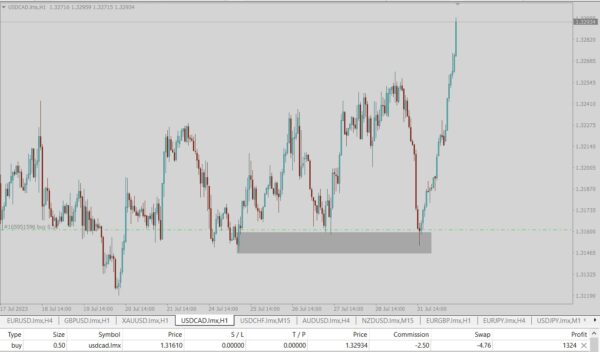
False Order Triggers and Stop-Loss Placement
False order triggers can happen when price briefly reaches a level, activates orders, and then reverses. This is why stop-loss placement matters.
Some traders blame only the broker when a stop loss is triggered, but the real issue is often poor placement, wide spreads, or weak calculation. Traders should understand bid and ask prices before placing stop-loss orders.
You can learn more in our guide on
how to set a proper stop-loss.
Final Thoughts
Forex trading is the exchange of currencies through currency pairs. It gives traders access to a large and active market, but it also requires education, discipline, and risk control.
Beginners should focus on the basics first: currency pairs, pips, spreads, stop loss, take profit, risk-reward ratio, and money management. These foundations matter more than chasing random entries or quick profits.
A trader who learns structure, manages risk, and treats forex like a business has a better chance of improving over time.
Editorial Note: This article was reviewed and updated by the PreferForex team as part of our forex education content update. It explains forex trading basics, currency pairs, trade execution, risk-reward ratio, stop-loss planning, and beginner risk control.
Risk Disclaimer: Forex trading involves risk and can result in financial loss, especially when leverage is used. This article is for educational purposes only and does not constitute financial advice, investment advice, or a guarantee of trading results. Always trade with proper risk management.