
Forex long-term trading signals are trade ideas designed to capture larger market moves over several days, weeks, or even longer. Unlike quick intraday trades, long-term forex signals focus on bigger market structure, higher-time-frame direction, and stronger risk-to-reward planning.
PreferForex focuses on structured forex signal ideas with planned entry zones, stop-loss levels, and take-profit areas. The goal is not to chase every candle. The goal is to wait for clean setups where the possible reward is larger than the planned risk.
A good long-term forex signal should not only show direction. It should also show where the trade becomes invalid, where profit can be taken, and whether the reward is worth the risk.

Key Points
- Different types of forex trading strategies
- Long-term forex trading
- Position trading
- Swing trading
- Best practices for long-term trading
- Short-term forex trading
- Low-risk, high-reward forex signal planning
- Why a solid trading strategy matters
- Examples of medium- to long-term trading signals
Types of Forex Trading Strategies
Forex traders use different strategies to identify possible entry and exit points in the market. These strategies help traders study price movement, market structure, trend direction, liquidity, and risk levels before placing a trade.
Market analysts and traders continue to update their methods as currency markets change. Some traders focus on short-term price movement, while others prefer a broader view using higher time frames.
Most forex trading strategies can be divided into two main categories:
- Long-term forex trading strategies
- Short-term forex trading strategies
New forex traders should build a strategy that matches their account size, risk tolerance, trading schedule, and experience level. In practice, many traders combine more than one method to improve their decision-making.
Forex Long-Term Trading
Long-term forex trading focuses on the bigger market picture. Instead of reacting to every small intraday movement, long-term traders study higher time frames such as the daily, weekly, and monthly charts.
These trades often stay open overnight and can run for several days, weeks, or even months. Because of this, long-term trading requires proper analysis, enough account margin, and disciplined risk management.
This style is often better suited to traders who can hold positions through normal market fluctuations without overreacting to short-term price movement.
Watch our related video here: Long-Term Forex Trading Video.
Why Low-Risk, High-Reward Signals Matter
Long-term trading works best when the trade setup offers a strong reward compared with the risk. A trader should not take a long-term trade only because the direction looks attractive. The entry, stop loss, and target must make sense together.
PreferForex long-term and medium-term forex signals are planned around this idea. A trade should have a clear invalidation level, realistic target, and enough reward potential to justify the risk.
Low-risk does not mean no risk. It means the trade is planned with controlled exposure, logical stop loss, and a target that offers better reward than the amount being risked.
In many cases, a strong setup does not need a very high win rate to be useful. If the average winning trade is larger than the average losing trade, the strategy can become more stable over time when risk is managed correctly.
This is why traders should study forex money management before increasing position size or holding trades for longer periods.
Macroeconomic Factors to Consider
Long-term forex traders should pay attention to macroeconomic conditions. Economic data can influence currency strength and market direction over time.
Important macroeconomic factors include employment data, interest rates, inflation reports, central bank policy, GDP growth, and political developments. These events are usually released on a scheduled economic calendar.
For long-term trading, technical analysis is important, but the broader economic background also matters. A strong trading plan should consider both price action and market fundamentals.
For example, a currency can remain strong for weeks if its central bank is expected to keep interest rates higher than other major economies. On the other hand, a weak economic outlook or dovish central bank tone can pressure a currency even when the short-term chart looks bullish.
Probability and Risk in Long-Term Forex Trading
A long-term trading strategy requires careful analysis and patience. Experienced traders often use wider stop-loss levels because higher-time-frame trades need room to handle normal market volatility.
Wider stop losses can help protect trades from small intraday spikes, but they also increase the amount of capital at risk if position size is not managed correctly. This is why lot size, account balance, and risk percentage must be planned before entering a trade.
In long-term trading, the stop loss should usually sit beyond a meaningful invalidation point. This can be below a demand zone, above a supply zone, beyond a swept liquidity level, or outside a major structure point.
The longer the trade horizon, the more important position sizing becomes. A wide stop loss is acceptable only when the lot size keeps account risk controlled.
Two Popular Long-Term Trading Styles
Long-term forex trading is often divided into two common styles:
- Position trading
- Swing trading
Position Trading
A position trader studies higher-time-frame charts, usually weekly or monthly, to identify broader market direction and potential trading opportunities.
Position traders often consider both technical structure and macroeconomic conditions before entering a trade. A position trade can stay open for several weeks, months, or longer, depending on the market setup.
Because position traders take fewer trades, each setup needs careful planning. They usually do not focus on small short-term price movement.
Position trading can suit traders who want fewer trades and more time for analysis. However, it requires patience, enough margin, and the discipline to avoid closing too early because of normal pullbacks.
Swing Trading
Swing traders usually hold trades for a few days or weeks. They focus on technical analysis, market trends, support and resistance, liquidity zones, and price action to plan entries and exits.
Swing trading sits between short-term trading and long-term position trading. It gives traders more flexibility while still using a structured market view.
Many PreferForex medium-term signal ideas follow a swing-trading style. The goal is to catch a meaningful market move without needing to sit in front of the chart all day.
Evaluate Swap Costs on Long-Term Positions
Long-term traders should always check swap charges before holding a trade overnight. Swap is the fee or credit applied by a broker when a position remains open after the trading day closes.
In some cases, swap costs can reduce profit or increase loss over time, especially when a trade stays open for several weeks.
A trade can look profitable on the chart but become less attractive after swap costs, spread, and holding time are considered. This is why long-term traders should check broker conditions before entering a position.
Using Leverage in Long-Term Trading
Leverage can increase both profit and loss. A long-term position can go through large drawdowns before reaching its target, so high leverage creates extra risk.
Traders should use conservative position sizing and avoid risking too much of their account on one trade. Lower leverage and controlled risk help traders manage daily market fluctuations more safely.
Long-term trading can give traders a clearer view of support, resistance, trend direction, and major market structure. Weekly and monthly charts often show cleaner levels than lower time frames.
For newer traders, long-term trading can also reduce emotional decision-making because it does not require constant chart watching.
Why a Solid Strategy Is Required
Long-term forex signals can help traders follow structured trade ideas, but traders still need a solid strategy to understand why a setup is valid. Without strategy, a trader may copy an entry but fail to manage the trade properly.
A solid forex strategy should explain the market bias, entry logic, stop-loss placement, take-profit target, risk-reward ratio, and invalidation point. It should also explain when not to trade.
PreferForex teaches this structured thinking through our Smart Money trading education. The course helps traders understand liquidity, market structure, institutional order flow, points of interest, and risk-managed execution.
Learn more about our Smart Money trading course if you want to build a more complete strategy behind the signals.
Signals can guide the trade idea, but strategy helps the trader understand the logic. The best traders do not only follow levels; they understand why those levels matter.
PreferForex Low-Risk, High-Reward Signal Planning
PreferForex provides structured medium-term and long-term forex signal ideas with planned entry, stop loss, take profit, and trade management updates. Learn more about our forex signals service.
Short-Term Forex Trading
Some traders diversify their approach by using both long-term and short-term strategies. Short-term trading focuses on smaller price movements and faster trade execution.
Day traders and scalpers usually open and close trades within a short period. These trades can last a few minutes or several hours, depending on the setup.
Short-term traders often use tools such as support and resistance, moving averages, candlestick patterns, liquidity zones, and lower-time-frame charts. Because they trade more often, spread, execution speed, and discipline become very important.
Short-term trading can create more frequent opportunities, but it also requires stronger emotional control. Traders need a clear plan before entering each position.
Example of Medium- to Long-Term Trading
In this section, we show examples of medium- to long-term forex signal setups. These examples are shared for educational purposes and show how planned entries, stop-loss levels, and take-profit targets can be structured.
In medium- to long-term setups, traders often look for larger price moves and stronger risk-to-reward ratios. One example from GBP/USD is shown below:
Sell GBP/USD from 1.6640, SL 1.6705, TP 1.6500
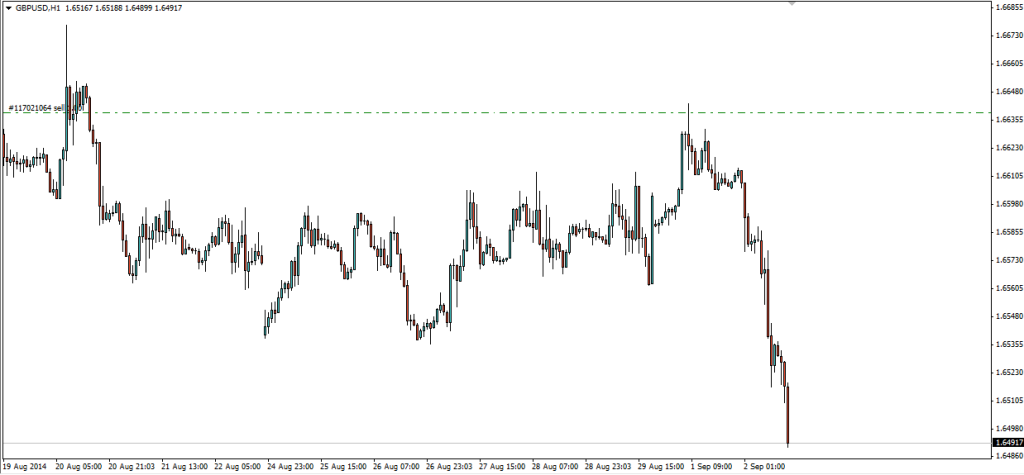
This type of setup shows why risk-reward matters. The stop loss defines the risk, while the take-profit level shows the planned reward. Traders should calculate position size before entry so that the stop-loss amount stays within their risk limit.
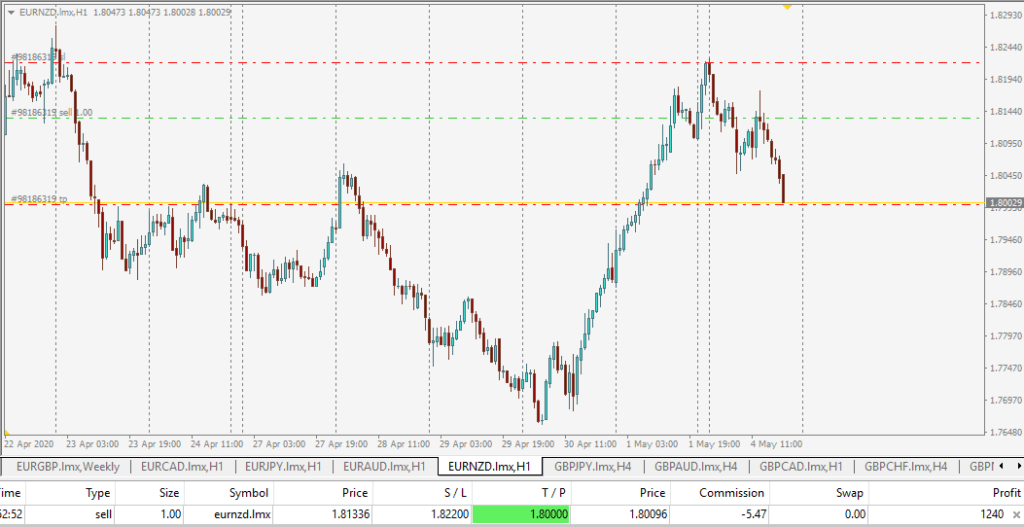
Another Long-Term Trading Chart
This trading setup was supported by several market factors. The chart below shows another long-term trading example based on a structured forex signal approach.
Another long-term trading example based on PreferForex signals.
Trade With a More Disciplined Plan
Professional trading is not about chasing every market move. It is about waiting for a planned setup, managing risk, and following a clear process.
PreferForex provides medium-term and long-term forex signal ideas with planned entry zones, stop-loss levels, and take-profit areas. Signal outcomes can vary because forex trading always involves risk.
A disciplined trading plan should include:
- Higher-time-frame market direction
- Clear entry area
- Defined stop-loss level
- Logical take-profit target
- Risk-reward calculation
- Lot size based on account risk
- Trade management rule after entry
Best Practices for Long-Term Forex Signals
Long-term forex signals need more patience than short-term alerts. A trader should not expect every setup to move immediately after entry. Price can consolidate, retest, or pull back before the larger move begins.
Use these best practices when following long-term forex signals:
- Do not use high leverage on long-term trades.
- Check swap cost before holding overnight.
- Use position size based on stop-loss distance.
- Avoid closing early without a market reason.
- Respect the invalidation level.
- Review the higher-time-frame trend before entry.
- Do not add extra trades without a plan.
Long-term trading can be powerful, but only when risk is controlled. A wide target does not matter if the position size is too large or the trader cannot hold through normal volatility.
Learn the Strategy Behind Smart Money Signals
A strong trading strategy helps traders understand liquidity, order flow, market structure, and risk-controlled entries. Learn more about our Smart Money trading course.
Final Thoughts
Long-term forex trading signals can help traders follow bigger market opportunities with better structure. These signals are most useful when they include planned entry, stop loss, take profit, and a strong risk-reward setup.
PreferForex focuses on low-risk, high-reward signal planning because long-term success depends on controlled risk, not random entries. A trader does not need to catch every move. A trader needs to wait for the right setup and manage the trade properly.
For the best results, traders should combine signals with education. A solid strategy helps traders understand why a setup matters, how to manage risk, and when to stay out of the market. This is where Smart Money concepts, market structure, and disciplined trade planning become important.
Editorial Note: This article was reviewed and updated by the PreferForex team as part of our forex education content update. It explains long-term forex signals, position trading, swing trading, swap costs, leverage, risk-reward planning, and structured signal strategy.
Risk Disclaimer: Forex trading involves risk and can result in financial loss, especially when leverage is used. This article is for educational purposes only and does not constitute financial advice, investment advice, or a guarantee of trading results. Always trade with proper risk management.