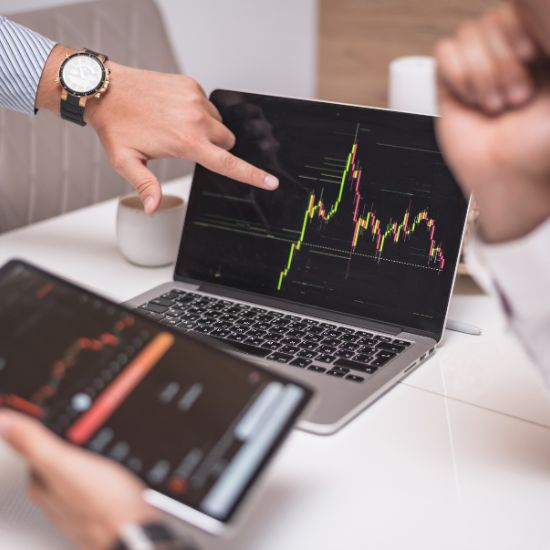
Many beginners enter the forex market because they see large price moves, high leverage, and success stories online. In practice, profit comes from managing risk first. A trader who protects capital, uses proper stop loss, and follows a clear plan has a stronger chance of lasting in the market.
Can Forex Trading Be Profitable?
Yes, forex trading can be profitable for skilled and disciplined traders. However, it also involves real financial risk. Profit does not come from guessing the next candle or using high leverage without a plan.
A profitable trader usually focuses on three things: protecting capital, waiting for high-quality setups, and managing risk on every trade. The goal is not to win every trade. The goal is to keep losses controlled and allow good trades to cover them over time.
Forex becomes dangerous when traders treat it like gambling. Overtrading, revenge trading, poor lot size, and emotional decisions can damage an account quickly.
A Brief Overview of Forex Trading
Forex, also called foreign exchange or FX, is the global market where currencies are bought and sold. It is an over-the-counter market, which means trading happens electronically through banks, brokers, liquidity providers, and market participants rather than through one central exchange.
The forex market runs 24 hours a day, five days a week. It starts with the Asian-Pacific session and moves through the London and New York sessions before the trading week closes on Friday.
Traders participate in the forex market by speculating on currency pairs. For example, when a trader buys EUR/USD, they expect the euro to gain value against the US dollar. When a trader sells EUR/USD, they expect the euro to lose value against the US dollar.
How Does Currency Trading Work?
Currency trading means exchanging one currency for another. In everyday life, this happens when someone travels abroad and exchanges local money for another country’s currency.
In forex trading, traders use currency pairs to speculate on price movement. If they expect the base currency to rise against the quote currency, they buy the pair. If they expect it to fall, they sell the pair.
For example, if a trader believes GBP/USD will rise, they buy GBP/USD. If the price moves higher, the trade can make profit. If the price moves lower, the trade can lose money.
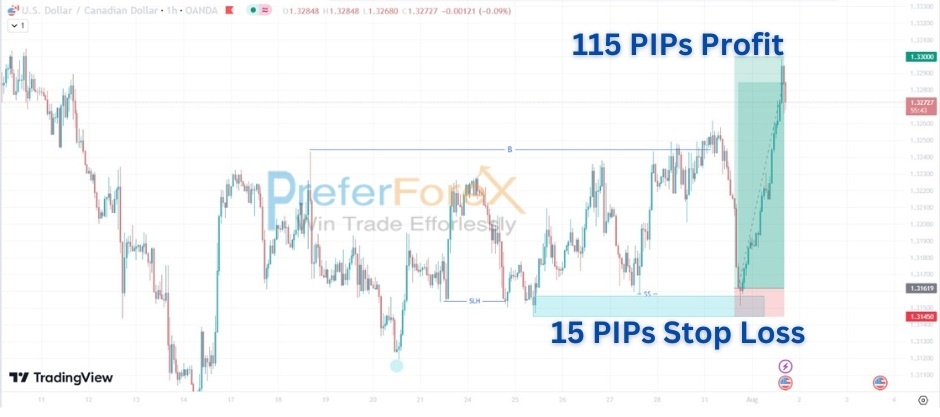
Below is an example of a PreferForex
forex signal
on GBP/USD showing how risk and reward can be planned before entering a trade.
Why Risk-Reward Ratio Matters
Risk-reward ratio compares how much a trader risks with how much they aim to make. For example, if a trader risks 20 pips to target 40 pips, the risk-reward ratio is 1:2.
A good risk-reward structure helps traders stay consistent. Even if some trades lose, a disciplined trader can still protect the account when losses are small and winning trades have enough reward potential.
A risk-controlled trade can help you grow as a smarter and more consistent trader. Success in forex does not come from taking random high-risk entries; it comes from protecting capital, using proper stop loss, managing lot size, and following a clear plan before every trade. If you want to build this discipline step by step, visit our forex tutorial page to learn how to become a smart trader.
How to Calculate Forex Profit and Loss
To understand forex profit and loss, traders need to know a few basic terms: bid, ask, spread, pip, and lot size.
Bid Price
The bid price is the price where a trader can sell a currency pair. It represents the price buyers are willing to pay.
Ask Price
The ask price is the price where a trader can buy a currency pair. It represents the price sellers are asking for.
Spread
The spread is the difference between the bid price and the ask price. It is one of the trading costs traders need to consider before entering a trade.
For example, if EUR/USD has a bid price of 1.0860 and an ask price of 1.0862, the spread is 2 pips.
Simple Profit Calculation
Suppose a trader opens a 100,000-unit GBP/USD position at 1.3147. If price moves from 1.3147 to 1.3162, that is a 15-pip move.
Example: On a standard lot, a 15-pip move can equal about $150, depending on the pair and account currency.
This same movement can also create a loss if price moves against the trade. That is why traders should calculate both potential profit and potential loss before entering.
Investment in the Forex Market
Forex trading requires preparation. Traders need to understand market conditions, volatility, technical analysis, fundamental analysis, trading psychology, and account risk.
Forex should not be treated as a quick-money scheme. A trader needs discipline, realistic expectations, and a strong understanding of how leverage and margin work.
Choosing a reliable and regulated broker is also important. Traders should review broker reputation, trading conditions, platform stability, spreads, withdrawals, and customer support before opening a live account.
What Is Required to Start Trading Forex?
To start trading forex, a beginner needs more than a trading account. The right tools and habits matter just as much as capital.
Trading Strategy
A trader needs a clear strategy before entering the market. A strategy can be based on technical analysis, fundamental analysis, price action, liquidity concepts, smart money concepts, or a combination of methods.
A good strategy should explain when to enter, where to place stop loss, where to take profit, and when to stay out of the market.
Capital
Traders need enough capital to trade safely. The required amount depends on the broker, account type, trading style, and risk level.
Small accounts can still be used for learning, but traders should avoid risking a large percentage of the account on one trade.
Trading Platform
A trading platform allows traders to view charts, place trades, manage orders, and monitor account performance. Common forex platforms include MetaTrader 4, MetaTrader 5, cTrader, and broker-based web platforms.
Broker
A broker gives traders access to the forex market. A good broker should offer stable execution, clear costs, reliable withdrawals, and proper regulatory standing.
Forex Calendar
A forex calendar helps traders track important economic events such as Non-Farm Payrolls, central bank rate decisions, inflation reports, GDP releases, and employment data.
High-impact news can create sharp volatility, so traders should know when major events are scheduled.
Forex Dashboard
A forex dashboard helps traders monitor market conditions, signals, updates, and chart analysis in one place. At PreferForex, premium members can access signal updates and analysis through the member area.
Forex VPS
A VPS is useful for traders who run Expert Advisors or automated systems. It keeps the trading platform online through a remote server with stable internet access.
Overall, forex trading requires knowledge, capital, technology, and discipline. With the right approach, it can become a serious skill, but it should always be managed with caution.
Forex Market Analysis
Forex traders mainly use two types of analysis: technical analysis and fundamental analysis.
Technical Analysis
Technical analysis studies charts, price movement, support and resistance, trends, candlestick patterns, indicators, and market structure.
Many traders use technical analysis to find entries, exits, and risk levels. It helps traders understand what price has done and where it may react next.
Fundamental Analysis
Fundamental analysis studies economic and political factors that influence currency values. These include interest rates, inflation, employment data, GDP, central bank policy, trade balance, and geopolitical events.
Long-term currency direction is often influenced by fundamentals, while short-term traders use news events to understand volatility risk.
Forex Analysis Example Video
Trading Forex Profitably
Many beginners ask how much money a forex trader can make. The honest answer is that it depends on capital, skill, strategy, discipline, risk management, and market conditions.
Forex is a highly liquid market, but liquidity alone does not guarantee profit. Traders still need a plan, a tested method, and strict control over position size.
A trader who risks too much can lose quickly, even with a good setup. A trader who controls risk and waits for quality opportunities has a better chance of staying consistent over time.
Do Not Put All Your Money in One Place
Risk control does not apply only to one trade. It also applies to overall financial planning.
Traders should avoid putting all available money into one market, one broker, one strategy, or one trade idea. Diversification and capital protection help reduce the damage if one decision fails.
In simple terms, do not put all your eggs in one basket. In trading, this means avoiding oversized positions, overexposure, and emotional decisions.
Risk of Leverage in Forex
Leverage allows traders to control a larger trade size with a smaller deposit. For example, if a trader deposits $1,000 and uses 1:2 leverage, they can control a position worth up to $2,000.
Some brokers offer much higher leverage. Many beginners make the mistake of using the highest leverage available without understanding the risk.
Leverage can increase profit potential, but it also increases loss potential. A small market move against an overleveraged position can create a large loss.
Beginners should use leverage cautiously and focus on learning a few high-probability strategies before increasing trade size.
Can Forex Change Your Financial Life?
Forex trading can become a serious income skill for some traders, but it takes time, study, and discipline. It should not be seen as guaranteed income or a shortcut to wealth.
Traders who respect risk, use proper management rules, and keep improving their process can build better decision-making over time. The goal is not to avoid every loss. The goal is to trade with a plan that can survive losses and still stay structured.
Learn and Trade With Better Risk Control
PreferForex provides forex signals, chart analysis, and trading education to help traders follow a more structured approach with entry, stop loss, take profit, and trade updates.
Trading involves risk. Use every signal with proper lot size, stop loss, and account protection.
Final Thoughts
Forex trading can be profitable, but only when it is approached with discipline, risk control, and realistic expectations. A trader needs a strategy, a trusted broker, proper education, and the ability to manage losses without emotional decisions.
The traders who last are usually not the ones who chase every market move. They are the ones who protect capital, wait for clean setups, and keep learning.
Editorial Note: This article was reviewed and updated by the PreferForex team as part of our forex education content update. The goal is to explain forex profitability, trading requirements, leverage risk, and risk-controlled trading in clear beginner-friendly language.
Risk Disclaimer: Forex trading involves risk and can result in financial loss, especially when leverage is used. This article is for educational purposes only and does not constitute financial advice, investment advice, or a guarantee of trading results.