
NZDUSD showed a short-term selling opportunity from a nearby supply zone.
The pair had moved upward for a short period. However, price was approaching an area where sellers could become active again.
The main plan was to wait for price to reach the nearest supply zone and then watch for bearish confirmation.
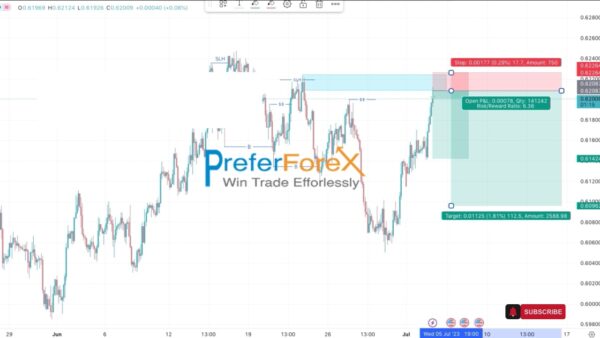
NZDUSD Price Action View
NZDUSD experienced a temporary uptrend.
This move gave price a chance to retrace toward the nearest supply zone. That zone was important because it could act as resistance.
If sellers reacted from that area, the pair could reverse lower in the short term.
Still, traders needed confirmation. A supply zone is not an automatic sell entry.
Nearest Supply Zone
The nearest supply zone was the main area to watch.
A supply zone is an area where selling pressure may appear. Price can react from this type of zone when sellers defend the level.
In this NZDUSD setup, the supply zone created a possible selling opportunity.
If price reached the zone and rejected, the bearish plan could become stronger.
The supply zone gives the location. Price action gives the timing.
Video Analysis
The embedded video explains the NZDUSD supply zone, sell-limit idea, and short-term trade plan.
Entry Strategy
The trading idea was to plan a sell entry from the nearest supply zone.
One possible method was to use a sell limit order below the supply area. This allows price to retrace first before the trade activates.
However, traders should not place pending orders blindly. The better approach is to check whether price shows rejection from the zone.
For better understanding of pending orders and execution types, traders can read our guide on forex orders.
Risk Management
Risk management was important in this setup.
A stop loss should be placed above the supply zone or above the invalidation area. This helps protect the account if price breaks higher.
The stop should not be random. It should be placed where the sell idea becomes invalid.
For deeper stop-loss planning, traders can review our guide on how to set a stop-loss order.
Profit Target View
Profit targets should be based on structure.
In a short setup, traders can target nearby support levels, previous swing lows, or liquidity areas below the current price.
The target should also match the risk-to-reward plan. If the reward is too small compared with the stop loss, the trade may not be worth taking.
A clean setup should have a clear entry, stop loss, target, and invalidation level before execution.
Market Order Flow View
This NZDUSD analysis was based on market order flow.
Order flow helps traders understand where price may react. It also helps identify liquidity areas, structure shifts, and important supply or demand zones.
The main concepts behind the analysis included:
- Order flow principle: Reading how price moves between supply, demand, and liquidity areas.
- Clear market structure: Understanding highs, lows, breaks, and retracements.
- BOCH: Break of character can show a possible shift in market behavior.
- CoCh: Change of character can help confirm a directional shift.
Signal Planning View
A short-term setup needs a clear plan.
For NZDUSD, the plan was based on the supply zone, bearish confirmation, stop-loss placement, and target selection.
Traders who want planned trade ideas with entry, stop loss, take profit, and trade-management updates can learn more about our forex signals service.
A good signal is not just a direction. It should include entry logic, invalidation, target, and risk management.
Preferred Scenario
The preferred scenario was for NZDUSD to move into the supply zone first.
If price rejected from that area, a short-term sell setup could form.
The first downside target would be nearby support or a previous swing low.
If price broke above the supply zone with strength, the sell idea would become weaker.
Final Thoughts
NZDUSD showed a possible short-term selling opportunity from the nearest supply zone.
The pair had moved upward, but that move was approaching an area where sellers could return.
Traders needed to watch for bearish confirmation before entering. A supply zone alone is not enough.
The better plan was to wait for price action, define the stop loss, set realistic targets, and manage risk carefully.
Editorial Note: This post was prepared as a PreferForex NZDUSD short-term outlook for July 4, 2023. It explains the supply-zone selling idea, entry strategy, stop-loss planning, profit targets, video analysis, and order-flow trading view.
Risk Disclaimer: Forex trading involves risk and can result in financial loss. This post is for educational and informational purposes only and does not constitute financial advice, investment advice, or a guarantee of trading results. Always trade with proper risk management.